
Shops · warehouses · showrooms
Commercial epoxy flooring in Coeur d'Alene, Idaho
Shop floors that take forklifts, fuel and a boat trailer parked on the same square foot all season, warehouse coatings that survive a January of mag chloride on the pallet-jack wheels, and showroom floors on Sherman Avenue that look like glass. Spec'd by zone, installed around your hours, priced in writing.
A lake town's shop floors
Built for the bays that actually exist here
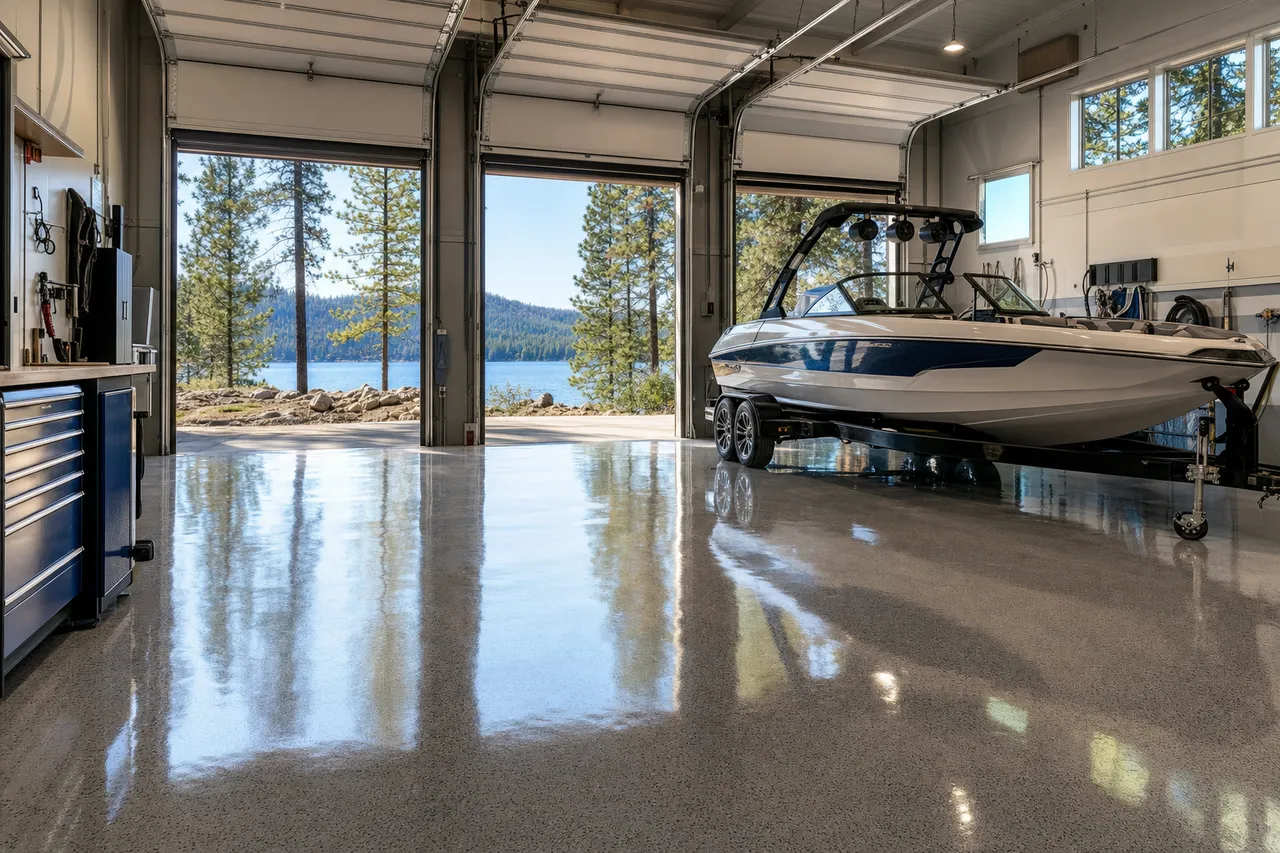
Coeur d'Alene's commercial floors are not office floors. They are marine service bays where a wakeboard boat sits on its trailer from October to May, dripping lake water and dropping a trailer jack onto the same spot every fall. They are RV and auto shops where hydraulic fluid and brake cleaner hit the slab every day. They are warehouses at Riverstone, in the Hayden industrial park and out along Riverbend in Post Falls, where a forklift comes in off a snowy dock carrying de-icer on its tires.
Every one of those floors needs a different system, and the pros this site connects you with spec the floor by what happens on it, not by what is on the truck. A high-build epoxy for the dry warehouse, aggregate in the top coat for the wet bay, a urethane-cement floor where a brewery hoses down with hot water, and sometimes no coating at all, when a ground and polished slab is the honest answer for a dry storage floor.
- Forklift and pallet-jack traffic rated in the spec, not hoped for
- Chemical resistance for fuel, hydraulic fluid, solvents and de-icer
- Slip texture by zone: aggregate where it is wet, smooth where it is swept
- Line striping, cove base and coating around fixed equipment included
Which system for which shop
Four floors, one honest match for each bay
The spec follows the room. A wet marine bay, a dry warehouse aisle and a brewery floor should not get the same coating, and an estimate that gives them one is an estimate to question. This is the map the pros here work from.
| Floor | System | Why |
|---|---|---|
| Marine and RV service bays | High-build epoxy, aggregate top coat | Lake water, fuel and trailer jacks all season; texture so a wet floor holds a boot |
| Auto and tire shops | High-build epoxy or urethane top coat | Hydraulic fluid, brake cleaner, hot tires off Highway 95 in July |
| Warehouse aisles, loading docks | High-build epoxy with line striping | Forklift turns and de-icer off the dock; striping cured into the floor, not painted on |
| Shops that cannot close | Polyaspartic one-day system | Walkable in hours, forklift traffic next day; a bay is down a shift, not a week |
| Breweries, food prep, washdown rooms | Urethane-cement | Thermal shock from hot washdown, acids and sugars; the only system that shrugs it off |
| Showrooms, salons, clinic corridors | Epoxy or metallic, smooth clear top coat | Rolling chairs and heels; a mirror finish that mops clean between clients |
| Dry storage, retail, distribution | Polished concrete | No film to peel, decades under forklifts, sheen without a coating |
The polyaspartic page covers the one-day system in detail, and the pricing page puts per-square-foot ranges on each of these.
Working around your hours
The shop stays open
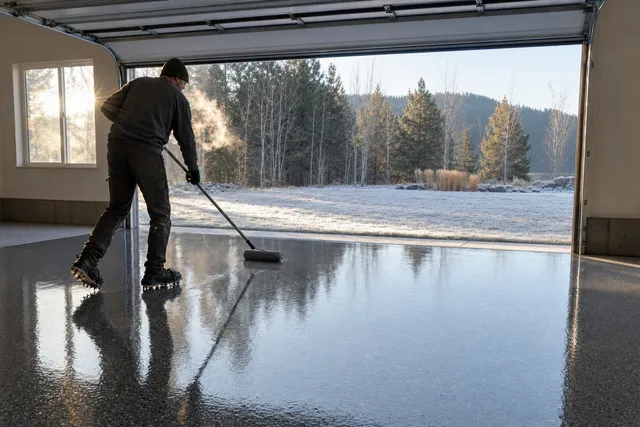
A commercial floor gets done in zones. The pros this site connects you with split the floor into sections that can be ground, coated and cured one at a time, and they put the coats down at night and over weekends when the bays are empty anyway. The marine shop keeps its lift running while the back bay cures; the warehouse keeps receiving while the aisles go down two at a time.
Where a floor cannot be down at all, the one-day polyaspartic system takes a bay from bare concrete to forklift-ready in about 24 hours. Where equipment is bolted to the slab, the coating is detailed around it and coved up the base so nothing pools underneath.
- Zones and dates in writing, so each bay knows when it is down and when it is back.
- Moisture test on slab-on-grade before any date is set; spring vapor is the killer here.
- A minimum job of $1,200, so a single small room is quoted honestly rather than padded.
Say what the floor handles. The spec comes back in writing.
Square footage, what rolls or drips on it, and whether the shop can close. That is enough for a range by zone before anyone comes out.
When a coating is the wrong answer
Polished concrete for the floors that do not need a film
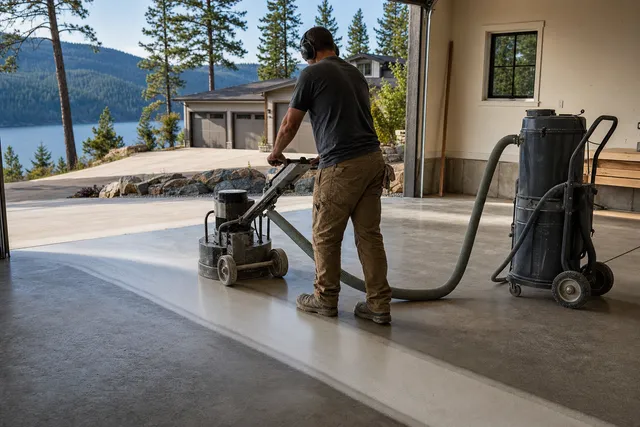
Some warehouses do not want a coating. They want a floor that is easy to sweep, holds up under forklifts for twenty years and never peels, and for a dry distribution floor that is a ground and polished slab: the concrete itself, cut down through a sequence of diamond grits, densified with a hardener and polished to whatever sheen the room wants. No film, nothing to delaminate, and the lowest maintenance of anything on this page.
It is not the answer everywhere. Polished concrete will not seal a floor against fuel or food acids, it shows every crack and patch the slab already has, and it stays slick when wet. A marine bay or a brewery still needs a coating. The measure says which, and the estimate is priced for the floor you have, not the floor the truck is loaded for.
What the measure looks at
- What rolls on it: forklifts, pallet jacks, rolling chairs, trailer jacks
- What lands on it: water, fuel, food, de-icer, hot washdown
- Whether it is on grade, and what the moisture reading says in spring
- The hours the bay can be down, and whether a one-day system earns its price
- Whether an apron, dock or walkway outside should go in the same spec
Asked by shop owners around Kootenai County
Commercial floor questions, answered by spec
What does commercial epoxy flooring cost in Coeur d'Alene?
Commercial and industrial floors in Kootenai County run $5 - $12 by spec per square foot installed, because the spec decides the number: a high-build epoxy in a dry warehouse sits at the bottom of that range, a urethane-cement floor in a brewery with hot washdown sits at the top. A one-day polyaspartic system for a shop that cannot close runs $9 - $13 per square foot. Larger floors earn a better per-foot rate than small ones because mobilization and grinding setup spread out; the written estimate breaks the floor into zones and prices each one.
Can the shop stay open while the floor is coated?
Usually, yes, by zoning it. A floor gets split into sections that can be ground, coated and cured one at a time while the rest of the bays keep working, and the pros this site connects you with schedule the coats for nights and weekends when the shop is empty anyway. A polyaspartic system helps here: it is walkable in hours and takes forklift traffic the next day, so a bay is down for a shift, not a week.
Which coating holds up to forklifts and hydraulic fluid?
A high-build epoxy or urethane system with a chemical-resistant top coat. Fuel, hydraulic fluid, brake cleaner and the mag chloride that rides in on a forklift in January all sit on the surface of a proper system instead of soaking in; a thin coat is gone in the aisles by the second winter. Where pallet jacks turn hard, aggregate goes into the top coat so the wheels bite instead of skid.
What is the difference between epoxy and polished concrete for a warehouse?
Epoxy is a film on top of the slab; polished concrete is the slab itself, ground and densified until it shines. Polished concrete has no coating to peel, takes forklift traffic for decades and costs less to maintain, but it will not seal against chemicals and it shows every crack and patch. Dry storage and retail floors are often better polished; wet bays, washdown floors and anything handling fuel or food need a coating.
Our slab is on grade and gets damp in spring. Can it be coated?
It can, once the moisture is measured and dealt with. Slab-on-grade concrete in Kootenai County pushes vapor upward when the ground thaws in March and April, and a coating applied over that without a mitigation primer bubbles by the first summer. A calcium chloride or in-slab probe test at the measure decides whether the floor needs the vapor primer, and that line goes on the written estimate before anything is scheduled.
Written estimates, by system
Tell us about the shop. The spec and the number come back in writing.
Square footage, what the floor puts up with, and the hours it can be down. That is enough to zone it and quote it by system, and the measure turns the range into a written estimate. Prefer the phone? Call (208) 758-9728.
- Itemized on paper - the grind, the repairs, the system, the top coat
- Slab moisture and temperature checked before anyone promises a date
- Cold-season work quoted as the system that can actually cure, never a guess